Winter moth
On antifreeze blood, ghost flights, and the quiet life of winter

There is a special charm to a holiday destination in the dead of winter. The quiet rustling of the waves on an empty beach, the way the fog sits on vacant piers, and the silence that replaces the summer scream of the cicadas. Our forests undergo a similar shift as autumn wanes. The birds go quiet, the insects disappear, and the trees shed their leaves. Most life retreats, seeking shelter from the encroaching bite of the frost. But like those savvy travelers who prefer a coastal town after the crowds have vanished, there are animals who know the secret of the forest: the off-season is when the woods are most peaceful, and safe. Emerging when the rest of the insect world has turned off the lights, the winter moth dances through the chilled November air to prove that there is life outside the peak-season. The forest is never truly closed for business.
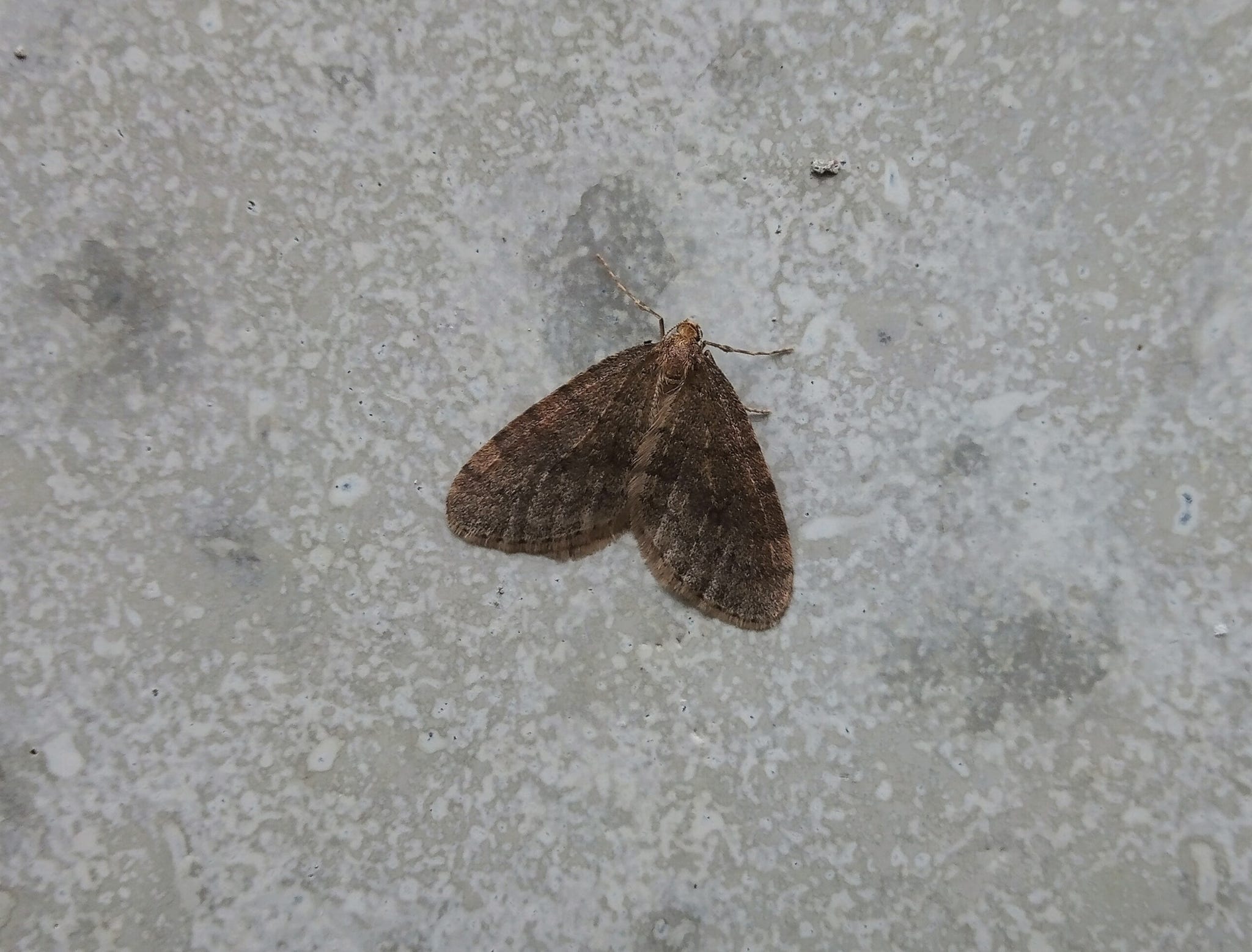
But what is a winter moth? Aren't moths creatures of short, warm summer nights? Well, yes. And no. The winter moth (Operophtera brumata) is one of a handful of moth species that have evolved a set of special adaptations that allow them to be active through the coldest months of the year. However, the name is deceiving: the winter moth is mostly out flying in the late autumn, with a clear peak in November. By January, there are but a few adults left. Before that, they lay their eggs, from which the caterpillars emerge in March and April to feast on the budding leaves of early spring. Around the end of May, these larvae burrow into the soil or leaf litter and spin a tough, earthen cocoon that keeps them protected from the heat and predators of summer, to emerge as adult moths from the end of October onwards. How they manage to thrive when most other insects have long disappeared is a story worth a closer look.
Most insects cannot survive sub-freezing temperatures. They don't have the luxury of warm sweaters or internal heating, so when temperatures reach the freezing point, the water inside their cells turns to ice, expanding into jagged ice crystals that physically rupture the cell membranes and destroy the delicate structures inside. Even if the cells survive the freezing process, all the chemical reactions necessary to keep the organism alive can come to a halt. To solve these problems, the winter moth has evolved specialized antifreeze compounds in its blood — the hemolymph — that prevents ice crystals from forming and damaging the cells, and special enzymes capable of catalyzing chemical reactions at very low temperatures.
Beyond the sub-zero chemistry, winter moths have a few other surprising tricks up their sleeves. One is that the females can't fly, having their wings reduced to tiny, useless stubs. This allows them to save the energy that usually goes into wing growth and flying, and redirect it towards egg production instead. To find a mate, they simply crawl up the trunk of a tree and emit pheromones to call the winged males to them. The males do have wings and fly, but to get airborne at low temperatures, they must vigorously vibrate their thoracic muscles to generate heat, which raises their internal body temperature enough to allow their wing muscles to function.
The winter moth is native to northern and central Europe, and eastwards towards the Caucasus and Asia Minor. It was introduced to North America in the 1930s, where it is considered an invasive species, reaching unbelievably high densities of up to ten million caterpillars per acre and causing significant defoliation in forests. To control winter moths in North America, in some areas, flies of the species Cyzenis albicans have been introduced. These flies lay thousands of microscopic eggs on leaves, which are ingested by the caterpillars during feeding. These eggs hatch inside the caterpillars, and the fly larvae feed on their tissues, eventually killing them.
The winter moth moves like a ghost through a landscape governed by the laws of winter. It is as if it knows every rule, yet the rules have no knowledge of the moth. This makes them special, but not unique. A few other organisms join them in this silent rebellion against the dictatorship of the cold. For example, while other plants wait for the spring thaw, the skunk cabbage takes matters into its own hands. It is one of the few plants capable of thermogenesis, chemically generating enough heat to melt the snow around it. If you see something that looks like a giant mosquito dancing in the cold January air, it’s likely a winter cranefly. Unlike their summer cousins, these flies emerge specifically in late autumn and winter, when they form mating swarms in the weak winter sunlight, to disappear back into the leaf litter once the temperature drops too low. On sunny winter days, you might also see what looks like pepper sprinkled on top of the snow. Those are snow fleas, a type of springtails — close cousins of the insects — that remain active in sub-zero temperatures thanks to antifreeze proteins, much like the winter moth.
In nature, there are clear high and low seasons dictated by the availability of sunlight. Yet, life never truly comes to a halt. While most creatures batten down the hatches to wait for the storm to pass, the winter moth and its peers see the encroaching frost as their moment to shine. If you venture out into the hush of the wintry woods, look closely. You’ll find the unlikely survivors, the rule-breakers who prove that even in the heart of the off-season, the forest is still very much open for business.
If you’d like to keep me open for business, you can buy me a coffee to support my work.
I love learning about this upside down world of insects in winter! ❤️