Common yarrow
Nature's medicine cabinet, and its many uses

Every year, April 13th is International Plant Appreciation Day, a day that celebrates the vital role of plants in our world. Fellow Substack writer Femke de Jong once asked me why I like plants, and after considering several options, I just answered: because they make me happy. A green landscape makes me happier than a grey one. The fragrance of flowers makes me happier than the stench of exhaust fumes. A world full of colour makes me happier than a bland one. But beyond aesthetics and their soothing effect on our nervous system, plants also provide us with food and oxygen, as well as a myriad of ecosystem roles such as recycling nutrients, pulling carbon from the atmosphere, filtering toxins from the environment, cooling down their surroundings through shading and transpiration, anchoring soil to prevent landslides, stopping deserts from spreading, and protecting our coastlines from being washed away by the sea. If all of those weren't more than enough to appreciate plants, they also hold cures for many of the maladies that plague us.
The use of plants for healing is likely as old as humanity itself. The oldest written records about medicinal plants and their uses date back to the beginning of civilisation, including the Shennong Ben Cao Jing, a book attributed to Chinese Emperor Shennong, who lived around the 28th century BC, that describes 365 medicinal plants, including Ephedra and its uses to treat asthma; and the even older Sumerian clay tablets from Nippur, which detailed recipes for drug preparation and listed over 250 plants, including poppy and mandrake.
In fact, archaeological evidence has shown that our close cousins, the Neanderthals, were already using plants as medicine long before the invention of writing. The analysis of dental plaque from ancient remains dating back some 50000 years, found in El Sidrón Cave, in Spain, showed that they had consumed poplar — which contains salicylic acid, the natural precursor to aspirin — and Penicillium, the fungus that gives us penicillin. This suggests they were self-medicating for dental abscesses or parasites. Even older remains from 60000 to 80000 years ago, found in Shanidar Cave, in Iraq, were buried with several plants with known medicinal properties, such as yarrow, Ephedra and groundsel. Although it is debated whether these plants were for burial rituals or medicine, their presence suggests an already deep knowledge of the local flora.
We humans are not alone. Other animals are also known to use plants to heal themselves. For example, if you have a cat or dog, you may have noticed that when it has an upset stomach, it will often seek out long blades of grass that can act as an emetic. Other examples include chimpanzees eating the bark of bitter leaf to combat intestinal parasites; orangutans chewing up the leaves of the Commelina plant and rubbing them onto their joints and limbs as a sort of anti-inflammatory ointment that likely eases muscle aches and pains; pregnant elephants going out of their way to find and consume trees known to induce labour; and various birds crushing citrus fruits or pungent leaves on their wings to kill mites and lice.
It has been estimated that roughly 10% to 15% of all plant species have known medicinal properties, meaning that there are more than 50000 plants worldwide used for such purposes. And many of them are commonplace species we come across on our everyday lives. For instance, you probably have garlic in your kitchen, but did you know it is a natural antibiotic and expectorant, and can be used to manage hypertension and lower cholesterol? Or that the dandelions growing on cracks in the pavement of your street can be used as diuretic and support liver health? Even the always dreaded nettles, that sting you at the lightest touch, can be used to treat joint pain and seasonal allergies.
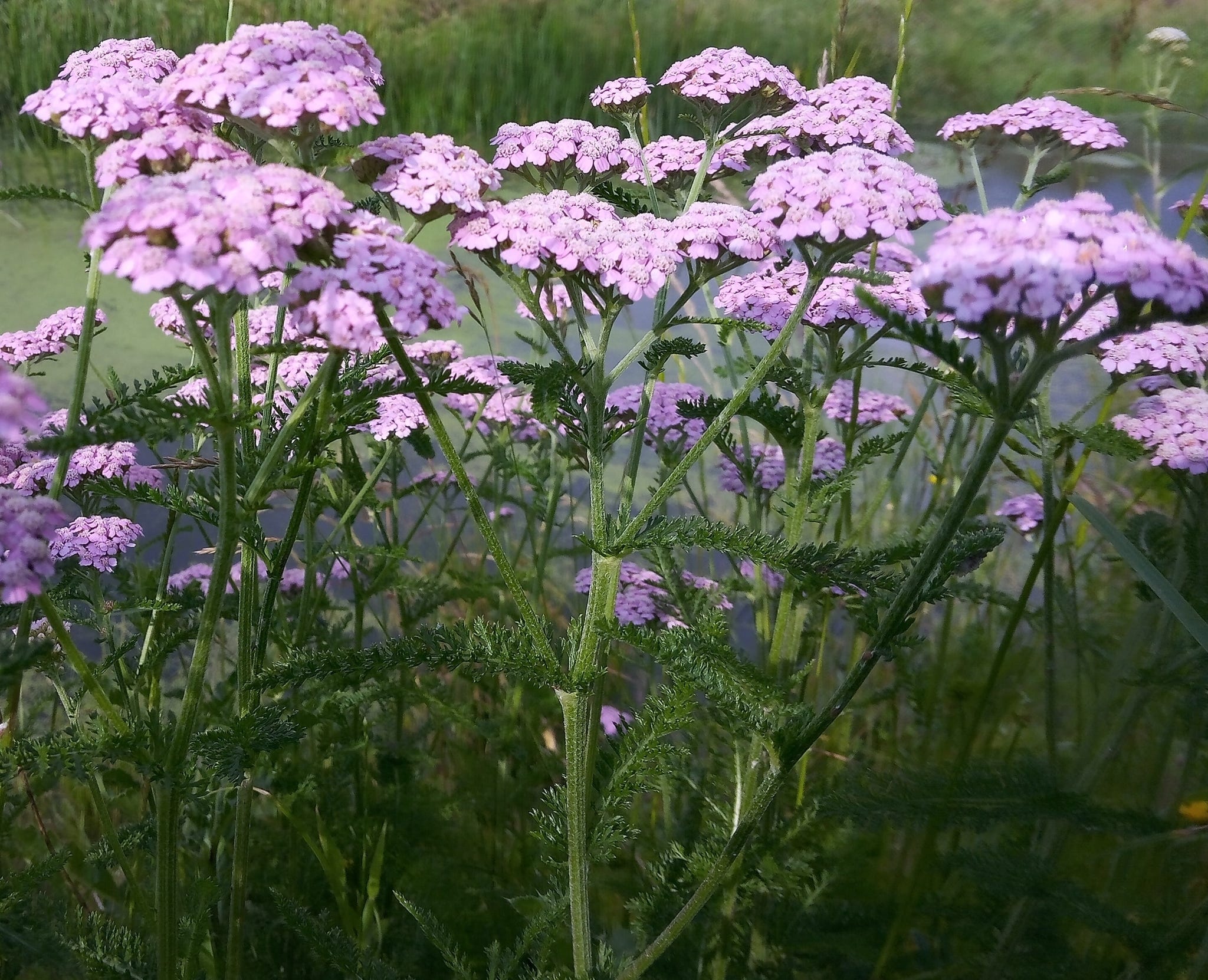
If you walk along open areas with disturbed soil, like roadsides or former construction areas, you might come across a tall herb with fern-like leaves and large discs of white, yellow or pink flowers, like the one in the photograph below. That plant is a common yarrow (Achillea millefolium) and it has been used as medicine since times immemorial. The yarrow was one of the plants found in the Neanderthal burial site mentioned above, and it has been used to treat wounds sustained in battle since at least the times of Ancient Greece. In fact, the Latin name Achillea derives from the mythological hero Achilles who was said to carry the herb into battle to treat wounds. According to Homer's classic epic Iliad, Achilles had learned that secret from his mentor, the centaur Chiron. Yarrow would be applied fresh to a wound or made into a poultice by crushing the leaves or flowers and mixing them with oil or grease, helping to reduce bleeding and inflammation. It can also be brewed into a tea to treat colds and break fevers by inducing sweating, and used for internal inflammatory or digestive complaints.
The medicinal uses of the common yarrow are far from just mythological. Modern tinctures and tablets use yarrow compounds to treat dyspepsia, bloating, and spastic discomfort; and the plant is also an active ingredient in pharmaceutical preparations for relieving menstrual cramps, as well as in modern ointments used to speed up skin healing. Furthermore, there is ongoing research into potential uses of yarrow extract as therapy against multiple sclerosis, kidney disease and cirrhosis. Not bad for a plant often considered a weed!
The common yarrow is a distant cousin of the daisies and sunflowers and is native to the temperate regions of Europe, Asia and North America. It is an important source of food for many insects and also used by cavity-nesting birds, such as starlings or swallows, to line their nests. It's possible that when birds add yarrow to their nests, this inhibits the growth of parasites, benefiting the healthy growth of their young. This would indicate that even birds have figured out the many medicinal properties of this marvellous plant. The common yarrow is also edible for humans, even if its leaves have a bitter and astringent taste, and it was used in the flavoring of beer prior to the use of hops.
It's hard to overstate the importance of plants for our health, for our life, for the life of all other animals, and for the whole biosphere of our planet. We may live on a blue planet, but it wouldn't be the same without its many wondrous shades of green. That is why I believe that Plant Appreciation Day shouldn't be celebrated once per year, but rather be something we did every single day. Will you join me?
Enjoyed reading about the common yarrow and the many wonderful properties of plants? Consider buying me a coffee to support my work.
Pedro, this deeply resonated with me, especially the sections on medicinal plants and humanity’s ancient relationship with them. My mother became a naturopath later in life, and she helped open my eyes to the intelligence embedded in the natural world. I grew up learning that many of the things we now package into pills often began in the soil, the leaf, the root, or the bark long before modern industry arrived. I especially appreciated how you connected human healing to the broader living system around us. The idea that even animals instinctively seek out plants for medicine says something profound about the continuity of life and wisdom on Earth. Beautiful piece.
I adore yarrow!! If I ever got a tattoo, I am fairly certain it would be of a sprig of yarrow - but for now, I am happy with yarrow tea! Thank you for sharing this delightful post, I learned so much from it.